Linguistic inclusiveness? Of course! But what about the resources?
- i. Context
- Many organizations, above all in the NGO sector, are strongly committed to linguistic inclusion, but budget constraints limit their ability to take action in this area. What alternatives are available that would allow them to serve communities that, due to their language, disability, or age, require translation, interpretation, or subtitling, without affecting their program budgets?
- ii. Challenge
- To ensure access for beneficiary communities to specialized linguistic services, such as interpreting and translation, to maintain the scope of their programs.
- iii. Technological and operational solutions
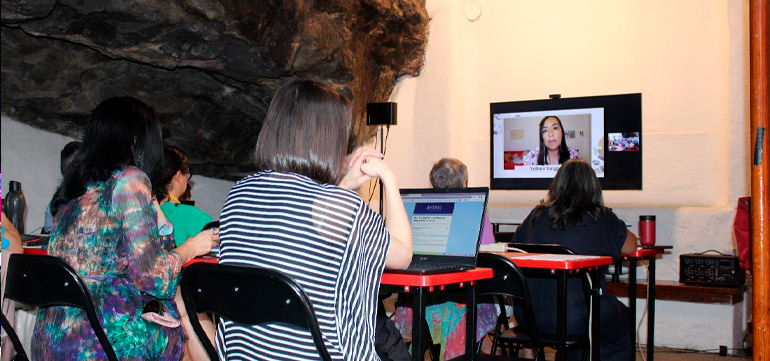
- 1. Employ remote interpreters for live or hybrid sessions, eliminating travel and accommodation costs.
- 2. Make use of real-time AI-based interpreting where the type of event permits.
- 3. Use human interpreting for some languages and AI interpreting for others, according to priority.
- 4. Use the audience’s own cell phones or portable devices to receive interpreting or subtitling via a browser, without the need for other equipment.
- 5. Use hybrid human + AI models where machine translation is reviewed by a language professional for precision and cultural sensitivity.
- 6. Implement scalable solutions that easily adapt to events of different types (size, requirements, goals, scope, budget, etc.)
- 7. Implement online systems that don’t need an app to be downloaded and allow[FP1.1] interpreting to be coordinated without complex infrastructure.
- 8. Take advantage of the organization’s resources and work with their team to reduce or eliminate management and operating costs.
- iv. Principal benefits
- 1. Fewer logistical setbacks and costs, making multilingual events possible at a lower price.
- 2. Greater inclusion and accessibility, allowing the participation of diverse audiences in different languages.
- 3. Flexibility and scalability to organize in-person, remote or hybrid events according to need.
- 4. Promotion of institutional cultural change that motivates innovation and openness to new collaborative practices.
- 5. Continuous training of personnel in the use of multilingual digital management tools to strengthen organizational autonomy.
- 6. Creation and use of collaborative glossaries, which improve cohesion of terminology and quality of interpreting and translation.
- With CM Idiomas, consulting services, you can design the solution that best suits each event, taking into account the audience, needs, and available resources. The team analyzes these factors and works with the organization to select delivery methods, provide training, and create specialized glossaries, ensuring quality and accuracy in all languages and settings.
Return to Success Stories
